Planet Zoo 2 Aquatic Animals Guide: Aquariums Done Right
Complete Planet Zoo 2 aquatics guide: freshwater vs saltwater aquariums, confirmed species like Blacktip Reef Sharks, water care, and tank design tips.
Planet Zoo 2 is the first game in the series where fully aquatic animals are a core system rather than a modding curiosity. Sharks, sea turtles, and schooling fish now live in proper aquariums with their own setup rules. This guide covers what Frontier has officially confirmed — and flags where the community is still testing.
What Makes Aquatics Different in Planet Zoo 2?
In the original Planet Zoo, marine life was effectively out of scope. Planet Zoo 2, released on October 13, 2026 for PC and consoles, changes that with two confirmed aquatic systems: freshwater aquariums and saltwater aquariums. Tanks are purpose-built habitats with their own barriers, life support, and viewing options, including the panoramic glass walls that make aquariums the best-looking buildings in any zoo.
The design intent is clear from Frontier’s own walkthroughs: aquatic habitats are vertical and visual. Guests should watch a shark glide past a two-story window, not squint at a pond. That changes how you plan — tanks are buildings, not enclosures.
Watch Frontier’s own deep dive on the system:

Planet Zoo 2 Feature Focus - Awesome Aquatics
Freshwater vs Saltwater: What’s the Difference?
The confirmed split is between freshwater and saltwater aquariums, and the two are not interchangeable.
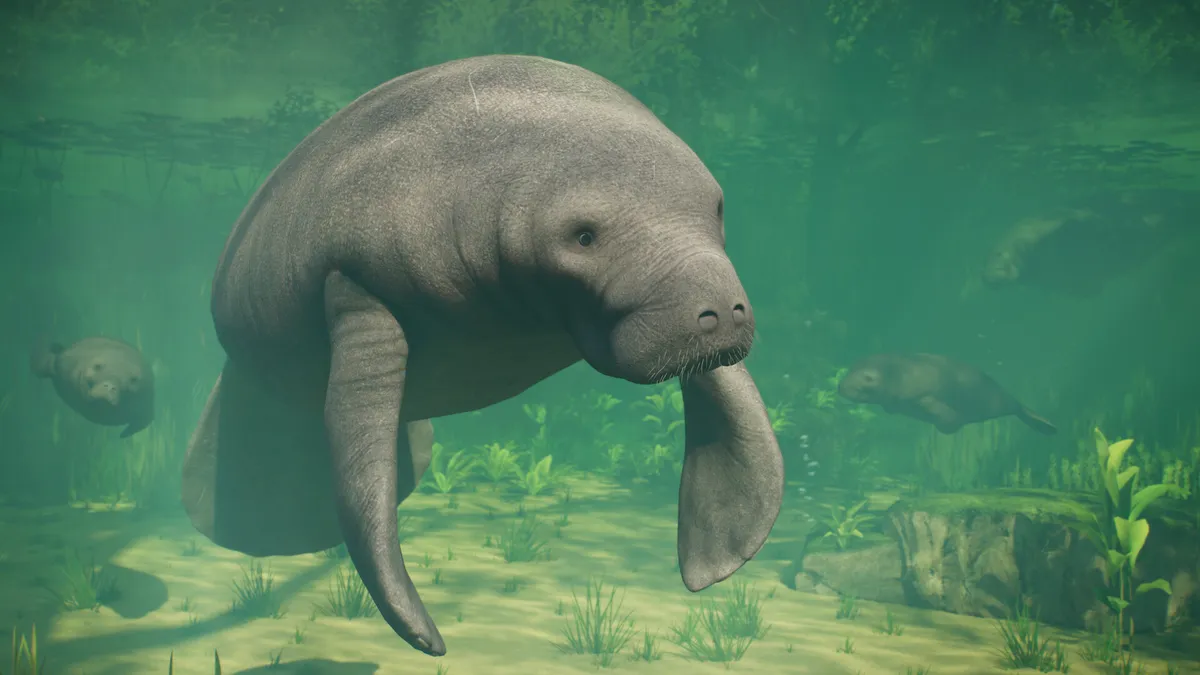
Freshwater tanks are the friendlier entry point. Officially shown freshwater scenes include grazing manatees in planted, river-like environments — think wide tanks with soft lighting, vegetation, and gentle species. Freshwater is where most players should start: the animals shown so far are peaceful, the theming is forgiving, and a modest freshwater tank fits into a standard zoo layout without dominating it.
Saltwater tanks are the showpieces. This is where Frontier placed its headline confirmed species: Blacktip Reef Sharks, Hawksbill Turtles, and dense fish shoals that move as one body through open water. Saltwater tanks read as ocean exhibits — bigger glass, stronger life-support infrastructure, and a higher bar for visual impact.
One tank, one water type. A freshwater setup cannot host saltwater species and vice versa, so plan your aquarium building around which biome story you want to tell. If you want a detailed look at the shark specifically, see our Blacktip Reef Shark animal page.
Which Aquatic Species Are Confirmed?
Frontier has officially named these aquatic animals in trailers and feature focuses:
- Blacktip Reef Shark — the saltwater flagship, shown swimming past guest viewing windows
- Hawksbill Turtle — a saltwater species that pairs naturally with reef theming
- Fish shoals — schools of smaller fish that add motion to any tank; the exact species mix has been shown as themed groups rather than individual announcements
- Manatees — shown in a freshwater scene, and the best current example of a gentle, large freshwater grazer
The full confirmed list lives on our all animals page, and Frontier continues to reveal species, so check the animal reveals tracker for the latest additions.
How Does Water Care Work?
The honest answer: the full numbers are not public yet. Community testing is underway, and this section updates as data firms up.
What is confirmed by series convention and Frontier’s presentation: water is treated as part of the environment pillar of animal welfare, alongside nutrition, social needs, and enrichment. Aquatic habitats ship with life-support infrastructure that keepers maintain, and neglecting it will degrade the environment your animals live in. Tanks also need keeper access for feeding and maintenance — the beautiful glass wall is for guests; the staff door around the back is for you.
Practical expectations you can safely build around:
- Assign keepers with capacity. A large tank is more maintenance work than a small one.
- Treat water quality dips like any other welfare problem: find the cause before symptoms cascade into guest complaints.
- Quarantine new arrivals mentally, if not mechanically — aquatics are expensive, and a tank crash hurts more than one muddy habitat.
It also helps to think of an aquarium as two habitats stacked in one footprint: the visible exhibit your guests enjoy, and the hidden service zone your staff work in. Series veterans will recognize the pattern from complex terrestrial builds, but aquatics raise the stakes because everything happens behind glass — when a terrestrial habitat fails, guests see a muddy field; when a tank fails, they see a fogged window and an empty blue box, which punishes your rating fast.
How Should You Design an Aquarium Guests Love?
Aquariums follow the same economy loop as the rest of your zoo — build habitats, attract guests, raise your zoo rating, earn money, expand — but they amplify it. A great tank is the single highest-draw building you can place.
Design guidelines that hold up in practice:
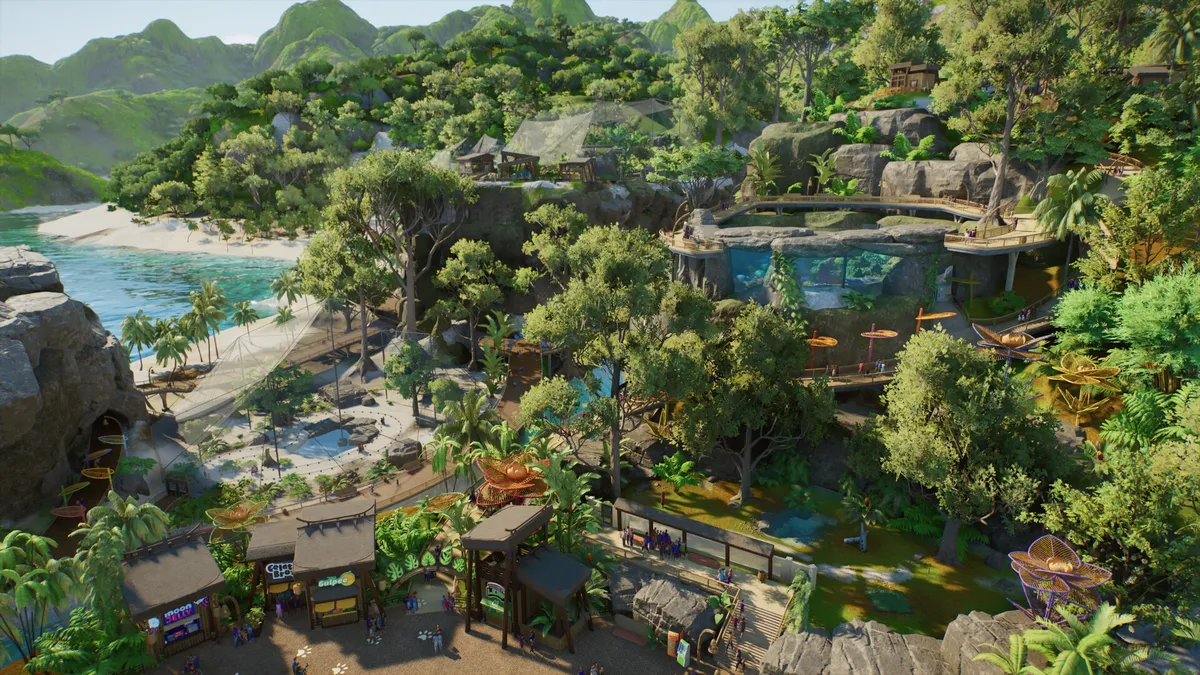
- Put glass where guests gather. A viewing window in a main thoroughfare beats a hidden observatory. Frontier’s tropical coastal showcase — a cliff-side zoo with a panoramic aquarium glass wall — is the template.
- Theme the interior. Substrate, rocks, plants, and wreckage tell a biome story. Saltwater reads as reef or open ocean; freshwater reads as river or swamp.
- Layer depth. Combine a large animal (shark, turtle, manatee) with shoals in the mid-water and bottom dwellers near the substrate so every viewing angle has motion.
- Mind the back-of-house. Life support, keeper doors, and staff paths eat space. Budget roughly a third of the building footprint for operations, not viewing.
- Charge for the experience. Aquariums justify premium facilities nearby — place your best shops and education boards along the exit path.
Where Do Aquatics Fit in a Growing Zoo?
Do not build an aquarium first. A single terrestrial habitat plus basic facilities stabilizes your economy faster; aquatics are a second-hour investment, not a first-hour one. Once income is steady, a freshwater tank is a low-risk way to learn the system before committing to a saltwater shark exhibit.
For broader context, start with our beginner guide, and if your ambition is eventually free-ranging wildlife rather than tanks, the Wildlife Reserves guide covers the endgame Frontier built for builders who outgrow enclosures.
Related Articles
animals
Planet Zoo 2 Blacktip Reef Shark: How Aquatics Change Zoo Design
Planet Zoo 2 blacktip reef shark guide: the launch roster’s reef ambassador, saltwater aquarium design, water gates, filtration and shark welfare.
guides
Planet Zoo 2 Beginner Guide: Your First 3 Hours
A timeline-based Planet Zoo 2 beginner guide covering your first three hours: tutorials, your first habitat, guest facilities, economy, and breeding.
guides
Planet Zoo 2 Flying Birds Guide: Building Your First Aviary
How to build walk-through aviaries in Planet Zoo 2: barriers, support poles, and dynamic mesh covers explained, plus confirmed birds like the Toco Toucan.
Was this helpful?
Thanks for the feedback!