Planet Zoo 2 Franchise Mode: Long-Term Zoos and Player Trading
Planet Zoo 2 Franchise mode challenges you to run a zoo for the long term and trade animals with other players. Here is how its economy works.
Franchise mode is Planet Zoo 2’s long-term management experience: one persistent zoo, an economy that never stops running, and — newly confirmed for the sequel — the ability to trade animals with other players. Where Career mode hands you a scripted journey and Sandbox mode removes pressure entirely, Franchise asks a harder question: can you keep a zoo profitable, ethical and beautiful for the long haul?
What Is Franchise Mode?
In Frontier’s official mode descriptions, Franchise mode is where you build a zoo and trade animals with other players. There is no campaign map and no mission script. You choose a location, found your zoo, and then live with every decision — the enclosure you over-built, the staff wage bill you under-estimated, the rare animal whose offspring suddenly become your most valuable asset.
Franchise is the mode where Planet Zoo 2’s simulation systems matter most, because nothing is temporary. Guest happiness, animal welfare, staff training and research all feed into one persistent economy, and small inefficiencies compound over in-game years. It is the closest the game comes to running a real zoo business.
Your opening decisions echo furthest. The biome and map you pick at founding shape which animals thrive outdoors year-round, which scenery themes feel native, and how hard heating, cooling and shelter will press on your budget. Choose a setting that matches the collection you intend to breed, not just the view you want to screenshot.
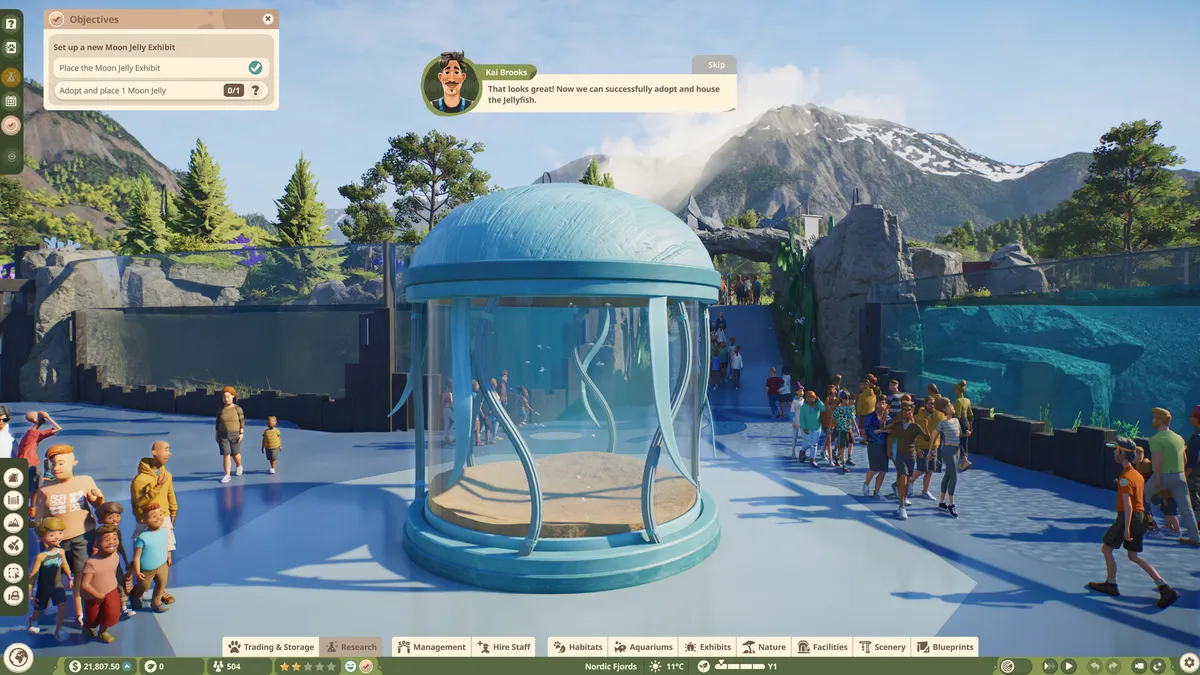
Trading Animals with Other Players
The headline confirmation for Planet Zoo 2’s Franchise mode is player-to-player animal trading. Your zoo is not an island: the animals you breed have value beyond your own gates, and other players’ collections become part of your market. A successful breeding programme can turn into a revenue stream, and a gap in your collection can be filled by another player’s surplus.
Frontier has not yet published the full rules of the trading system, so we will not invent specifics about pricing or markets. What the confirmation already tells you is how to think about your collection. Genetic diversity, species rarity and breeding success are all likely to shape an animal’s trading value, which makes welfare and husbandry economically meaningful rather than just ethical choices.
Trading also gives Franchise mode a social dimension the other modes lack. Your zoo exists in a wider ecosystem of player-run zoos, and specialising — becoming the player known for excellent big cats, or for dependable workhorse species — is a viable long-term strategy. Keep an eye on our animal list and the update tracker as Frontier reveals which species arrive at launch.
Because the mode is persistent, your collection becomes your legacy. Animals acquired early can still be breeding decades of game-time later, and bloodlines you nurture in year one may anchor your trading reputation in year ten. Think in generations, not sessions: pair animals for genetic diversity, keep records of which line produces the strongest offspring, and resist the urge to sell your best breeders for quick cash.
The Economic Pressure of a Long-Term Zoo
Franchise mode’s defining feature is that the bills never stop. Every habitat you build adds maintenance. Every animal you house adds food costs and keeper workload. Every facility you open adds staff wages. Income from tickets, shops and donations must cover all of it, month after month, or your zoo slowly bleeds money.
That pressure shapes every decision. A huge, gorgeous habitat is a guest magnet — but also a keeper-time sink. A cheap, cramped one saves money — until welfare drops, guests complain and your reputation follows. Frontier has confirmed that animal welfare runs on multiple needs, so efficient habitat design is not optional in Franchise; it is the core economic skill. Our habitat design guide goes deep on building enclosures that keep animals and accountants happy.
Veteran managers should also plan around slow systems: research unlocks, staff training and breeding timelines all pay off over years, not minutes. The money-making guide covers the confirmed income levers in detail.
Reputation: The Compounding Currency
Money is only half the economy. Reputation — earned through animal welfare, guest happiness and conservation work — compounds in the background of every Franchise decision, and it is the quiet force behind both ticket sales and trading leverage. A zoo famous for excellent welfare attracts more guests per exhibit; a player famous for honest, quality trades gets better deals from the community.
This is why cutting corners is so expensive in Franchise mode even when the books look fine for a month. A welfare dip does not just risk one animal — it dents the reputation that every future habitat, trade and expansion depends on. Protect it the way you would protect your cash balance: fix problems before guests notice, and never let an enclosure degrade while you chase growth elsewhere.
Franchise vs Career and Sandbox
The three modes solve three different appetites. Career mode wraps management inside a globe-spanning FEN adventure with scripted objectives — see our Career mode guide for how that campaign works. Sandbox mode hands you unlimited resources to enjoy unlimited creativity, which our Sandbox mode guide breaks down.
Franchise keeps the full simulation and adds consequences that outlast any single play session. If you want your decisions to matter tomorrow — and to other players — this is your mode.
Who Should Play Franchise Mode?
Franchise suits experienced management-sim players who find Career mode too scripted and Sandbox mode too weightless. It is for builders who want a reason to optimise, breeders who want their animals to mean something beyond one save file, and anyone who enjoys an economy that fights back.
Expect slow openings, tense mid-games and zoos you are still proud of a hundred hours later. Found your franchise, breed well, trade smart, and let the pressure make the victories real.
Related Articles
game-modes
Planet Zoo 2 Career Mode: The FEN Global Adventure Explained
Planet Zoo 2 Career mode sends you around the world with FEN, the Fauna and Ecosystems Network, to build zoos and rewild Wildlife Reserves.
game-modes
Planet Zoo 2 Sandbox Mode: Unlimited Creativity, Zero Pressure
Planet Zoo 2 Sandbox mode removes money limits so you can enjoy unlimited creativity. Learn how blueprints, scenery themes and tools work without pressure.
guides
Planet Zoo 2 Money Making Guide: Economy Explained
How money works in Planet Zoo 2: the official build-attract-earn-expand loop, shops and amenities, education income, and breeding animals to trade in Franchise.
Was this helpful?
Thanks for the feedback!