Planet Zoo 2 Habitat Design Guide: Welfare, Terrain and Foliage
Design better habitats in Planet Zoo 2 with this guide to terrain and foliage brushes, water, real animal behaviour and the four pillars of animal welfare.
Every zoo in Planet Zoo 2 lives or dies by its habitats. Guests come for the animals, animals live by their welfare, and welfare is decided — more than anywhere else — by the space you build. This guide covers the confirmed systems that shape habitat design: the four welfare pillars, terrain and foliage brushes, water, and the real animal behaviours your enclosures must accommodate.
The Four Pillars of Animal Welfare
Planet Zoo 2’s welfare model runs on four confirmed pillars: nutrition, social, environment and enrichment. A habitat that ignores any one of them will fail its animals no matter how beautiful it looks.
Nutrition means appropriate food, presented the way the species expects — grazing animals need vegetation to browse, while specialised feeders suit others. Social covers companionship: herd animals need company, and some species need specific group compositions to stay calm. Mixed-species habitats can satisfy several social groups at once and delight guests, but only when the species share compatible needs — matched climate, matched diet and enough space that neither crowds the other. When in doubt, house species separately and let the viewing areas share the space instead. Environment is the physical habitat itself — space, terrain, water, plants, temperature and shelter. Enrichment covers the items and features that let animals express natural behaviour, from climbing structures to mud wallows.
Design habitually and you will notice these pillars map neatly onto your build process. Food stations and feeders address nutrition. Group size and mixed-species choices address social. Everything you sculpt with the terrain and foliage brushes addresses environment. Toys, pools and structures address enrichment. Keep all four in the green before you spend a single coin on guest-facing scenery.
Terrain Brushes and Water
Frontier has confirmed that Planet Zoo 2 ships with terrain brushes — the tools that let you raise hills, carve valleys and paint ground types directly into your habitat. Terrain is not decoration; it is welfare infrastructure. Elevation creates vantage points prey species need to feel secure, and sheltered dips let heat-loving animals rest out of sight.
Water deserves equal attention. Planet Zoo 2 introduces fully aquatic species, so water is no longer a shallow visual layer — it is a navigable environment with depth, flow and viewing value. Even for terrestrial species, water features double as enrichment and drinking sources. When you design, think in basins: dig first with the terrain brush, then let water fill the shape. Our aquatic animals guide covers what confirmed underwater species need from their exhibits.
Foliage Brushes and Real Animal Behaviour
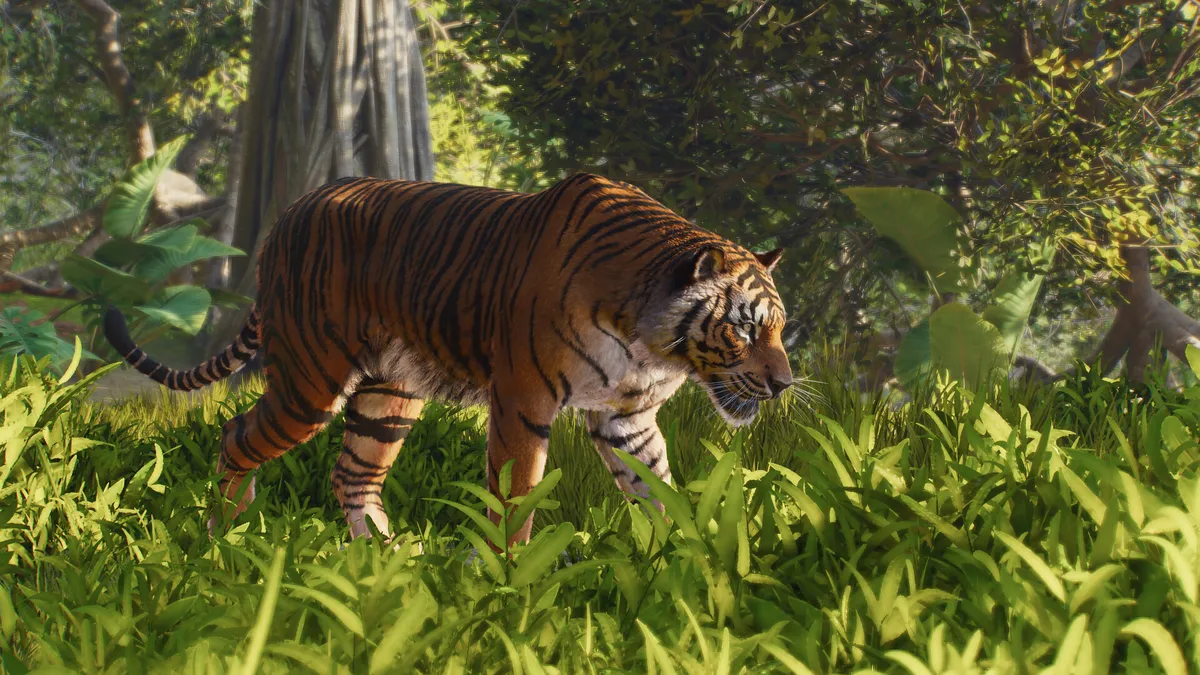
Frontier has confirmed that foliage brushes return alongside terrain tools, letting you paint trees, shrubs and grasses into habitats quickly. Foliage does triple duty in Planet Zoo 2: it builds the environment pillar, it feeds the nutrition pillar, and it creates the naturalistic look guests respond to.
The behaviour that ties it together is grazing. Confirmed for the sequel, animals graze on vegetation — they eat the plants in their enclosure rather than only using feeders. That single behaviour changes how you should plant a habitat. Grazing species need enough vegetation to both eat and enjoy, which means foliage is a consumable resource you will maintain, not a one-time paint job. Herd species add another layer: they move, feed and rest as groups, so open grazing lawns beside scattered cover work better than dense, uniform planting.
Study your species before you plant. Our animal pages — the giant panda, the Komodo dragon and the African wild dog — track confirmed habitat needs as details are revealed.
Habitat Layout: The Viewer’s Half
A great habitat serves two audiences: the animals inside and the guests outside. Once the four pillars are satisfied, design the guest half around sightlines. Open frontages with moats or low barriers beat tall fences for visibility. Elevated paths and viewing areas let guests see over terrain you have sculpted for the animals. Shade, seating and nearby facilities keep viewers comfortable enough to stay — and staying guests donate more.
If you want a faster route to a polished result, place a ready-made habitat from the blueprint system and then adapt it with your own terrain and planting. Our blueprints guide explains when to start from blueprints and when to build piece by piece.
Common Habitat Mistakes to Avoid
Three mistakes sink more habitats than any others. First, under-sizing the space: welfare drops when animals cannot distance themselves from guests or herd-mates, so build bigger than the minimum you think you need. Second, ignoring keepers: even a perfect habitat fails if staff cannot reach feeders, water and gates efficiently. Third, one-note planting: a habitat that is all lawn or all forest serves neither grazers nor browsers.
Designing for Every Species Type
Planet Zoo 2 expands the definition of “habitat” beyond land enclosures. Fully aquatic species need tanks and aquariums where water quality, depth and underwater sightlines do the work that terrain does on land. Flying species need aviaries tall and planted enough for natural flight. The four welfare pillars apply to all of them — only the tools change. When you plan a mixed zoo, budget your attention accordingly: an aquarium is not a land habitat with water swapped in.
Climate and shelter deserve one final word. Every species has an expected environment, and a habitat that ignores temperature and cover will fail its animals regardless of size. Use terrain to create shaded hollows and windbreaks, plant trees for cover, and place heated or cooled shelters where the biome demands them. The goal is always the same: an animal that would choose this enclosure in the wild.
Sandbox mode is the cheapest place to experiment — our Sandbox mode guide covers why unlimited funds make it the perfect habitat laboratory. Build for the four pillars first, then make it beautiful. Your animals — and your accountants — will thank you.
Related Articles
animals
Planet Zoo 2 Komodo Dragon: Enclosure, Feeding and Release Status
Planet Zoo 2 Komodo dragon guide: official Zoopedia stats, habitat design for the world’s largest lizard, and its role as a zoo showpiece.
building
Planet Zoo 2 Blueprints Guide: Ready-to-Place vs Piece-by-Piece
Planet Zoo 2 blueprints let you place pre-built designs instantly, or build piece by piece with scaling, flexi-colour and pathing tools. Here is when to use each.
building
Planet Zoo 2 Scenery Themes: 4 New Themes and 5 Returning
Planet Zoo 2 confirms four new scenery themes and five returning from Planet Zoo, with iconic architecture across globe-spanning biomes. Here is what each offers.
Was this helpful?
Thanks for the feedback!